
For POC laboratories
Single-gene re-analysis for euploid POC cases.
Both parents’ whole-genome sequencing, analyzed with the POC microarray data you already produce — the same trio-phasing method behind our embryo product. No new specimen.
Your accessioning, karyotype, array, and report are unchanged — this adds one node after the array.
From · Published in · Backed by

$4.3M seed — led by CRV and BoxGroup. Y Combinator alumni.
Evidence · sequencing of euploid POC
About 1 in 4 families with unexplained, recurrent euploid loss had a possible single-gene cause.
30 of 118 families — each with two or more chromosomally normal losses and no identified cause — in the largest study sequencing euploid products of conception directly; 21 of the 30 had pathogenic or likely-pathogenic variants.
1 in 4
Aminbeidokhti et al., medRxiv 2025
(preprint) · 30/118 families = 25.4% incl. candidate findings · 21/30 P/LP
Convergent cohorts: Zhao et al., Genet Med 2021 (22%, N=102); Bozhinovski et al., Balkan J Med Genet 2025 (19.7%, N=66).
3.6×
Euploid pregnancy losses were 3.6× as likely to carry a pathogenic or likely-pathogenic sequence variant as living adults — 467 loss trios from Copenhagen against 7,760 adult trios from deCODE’s Icelandic cohort. The excess sits in genes essential to early development rather than in the overall mutation count, and the authors estimate about two-thirds of these variants are truly causative.
Arnadottir et al. (deCODE), Nature 2025. OR 3.63 in euploid losses (P = 3.0×10⁻⁴), 2.98 across all losses; consecutive, unselected losses <22 weeks — independent of the recurrent-loss cohort above.
83%
of families with a finding — inherited from one or both parents rather than arising de novo. Which is why both parents’ genomes, not a denser look at the conceptus, are the missing layer.
25 of 30 families with a finding. Aminbeidokhti et al., medRxiv 2025 (preprint).
Why these genes
Biallelic (recessive) findings
CRB2 · DHCR7 · PIEZO1 · PIGV · PRF1
- Both parents carriers → 1 in 4 recurrence
- Actionable: IVF with embryo screening for that variant (PGT-M)
Maternal-effect genes, read in the mother
TUBB8 · PADI6 · NLRP7
- The causal genotype is the mother’s and biallelic — the pregnancy carries at most one copy, which diagnoses nothing
- Hers is the only genome where this class is diagnostic: these genes act in the egg, before the embryo’s own genome switches on. The class concentrates in recurrent molar pregnancy and IVF embryonic arrest
Reviewed against the Human Intolerome known tier (182 prenatal-onset genes) and ESHRE FeRGI lists — 500+ genes drawn from a 750+ reproductive-gene panel.
Method · how the inference works
Both parents’ genomes turn the array’s sparse signal into a dense one.
Each marker on the POC array tags one of four parental haplotypes — two from the mother, two from the father. Once every marker is assigned, the long stretches between them are read from the parent haplotype that segment came from.
- The array’s markers are the anchors — the positions your lab already genotyped.
- Both parents’ genomes supply everything between the anchors.
- What the pregnancy inherited becomes readable across the 750+ gene panel — including variants the array never probed.
This runs on the array file your lab has already produced, plus both parents’ saliva.
Maternal whole genome
Paternal whole genome
POC array · genotyped markers
sparse
≈750,000 markers — about 0.02% of the genome
each marker is matched to one of four parental haplotypes
Inferred pregnancy tissue genome — one copy from each parent
dense
Illustrative. Segment boundaries are recombination crossovers; every stretch is coloured by the parental haplotype it came from.
Maternal cell contamination
Some archived 46,XX results were the mother, not the pregnancy.
A maternal cell contamination study runs only when a maternal comparator is submitted — at major POC array menus that sample is recommended or separately ordered, not required. Without it, a substantially maternal specimen reads out as a normal 46,XX result. See how the phasing works on the array file you already hold.
59%
of normal 46,XX POC results were maternal, not fetal — identified by comparing each specimen’s SNP fingerprint against maternal blood.
269 of 456 normal 46,XX results, from N=1,222 specimens (22% of all samples). Lathi et al., Fertil Steril 2014.
What Reticular settles from the array
Checked against both parents’ genomes, the archived array itself says whose DNA it holds — retroactively, and with no maternal blood draw.
What it cannot do
A maternal-dominant file cannot be re-analyzed — there is no fetal genome to infer. That case converts to a parents-only finding on the same 750+ reproductive-gene panel, never to a POC finding.
Why it comes first
It qualifies which archived cases are analyzable before anyone promises a patient anything, and stops a normal 46,XX result that was never the pregnancy from standing as one.
Compliance
Low operational lift, no new workflow.
- No payment to the laboratory per case or referral.
- The patient opts in and pays Reticular directly.
- Billing, array protocol, report, CPT codes, turnaround: unchanged.
Two possible structures
Patient-initiated clinical service
the current model
- The patient consents to Reticular’s own terms, authorizes release of her own array data, and pays Reticular directly.
- Your lab’s role begins and ends with honoring that release.
- A CLIA-certified laboratory performs the sequencing.
- No protocol, no study cohort, no publication attached.
Formal research collaboration
possible, not in place
- An IRB-approved protocol.
- A data use agreement governing exactly what moves between us.
- Publication and authorship terms agreed before enrollment opens.
- Reticular-funded sequencing rather than patient payments — the lab neither pays nor is paid.
We welcome a conversation about which structure fits your lab.
ACMG’s data-stewardship policy makes the testing laboratory the primary steward of the patient’s interest in controlling genetic privacy, and expects a data use agreement setting use and transfer limits. Best RG et al., Genet Med 2022;24(3):509–511.
The bigger goal
Long term, we’re building the largest reproductive genomics biobank to explain unexplained pregnancy loss.
The live Intolerome database (rpldb.org) curates 930+ genes associated with fetal lethality, pregnancy loss, stillbirth, or neonatal death — yet the datasets behind reproductive genomics remain remarkably small.
1,000couples
sequenced — a dataset of this kind has not been assembled in the United States
That scale lets us validate which genes actually contribute to pregnancy loss, discover causes today’s studies are too small to find, and give more families an answer to “Why did this happen? Can I prevent this?”
Precedent
A defined list already had an indication
PreventionGenetics ran the Fetal Concerns Panel — 40 genes, 38 conditions, indication: “any unexplained miscarriage, stillbirth or neonatal death in which chromosomal microarray studies have been normal” — launched in December 2016 as the Comprehensive Miscarriage, Stillbirth and Neonatal Death panel, later marketed as the Fetal Concerns Panel, and no longer listed on the lab’s public test menu. Nothing replaced it: the choice today is a microarray or a phenotype-gated exome, with no defined-list tier between them.
A routine collaboration shape
Natera + Stanford — PLK4 aneuploidy, Science 2015 · Invitae + McGill — 24,900 losses, RBMO 2022.
Data compatibility
See if your POC data is compatible.
One thing decides it: how many SNPs your array actually genotypes. Copy-number resolution isn’t the question here — genotypes are, because genotypes are what let us read inheritance.
Your POC platform
With Reticular
Dense SNP array
~750,000 SNP probes
CytoScan HD-class designs · dense Illumina bead arrays
Compatible
Enough genotyped markers to read what the pregnancy inherited.
SNP bead array
~300,000 SNP markers
Genome-wide Illumina bead-array genotyping
Compatible
Enough genotyped markers to read what the pregnancy inherited.
aCGH with a SNP backbone
~60,000 SNP probes
CGH-first designs carrying a small SNP backbone
Not compatible
Copy number is resolved, but there are too few genotypes to read inheritance.
FFPE MIP array
Molecular-inversion probes
Fixed-tissue designs, built to measure dosage
Not compatible
Designed to measure copy number, not to genotype.
NGS copy-number
Read depth only
Low-pass sequencing counted by coverage
Not compatible
There are no genotypes in the output.
Something else, or not published
Any platform not listed above
Including arrays your test directory doesn’t name
Talk with us
We read marker density from the file itself, not from the platform name — send one de-identified raw file and we will confirm. Accepted: .CEL / .CHP (Affymetrix/Thermo), .idat / GTC (Illumina).
Common questions
Questions, answered.
Incoming is the ideal fit: both parents’ saliva is needed, and recontact is more difficult once a case has closed. Archived cases work where consent and recontact allow.
A euploid array result is usually where the workup stops — the case that closes with the question still unanswered. Those closed cases are our lane: tissue exhausted, degraded, or never retained, and a euploid result months or years old. A POC exome cannot take them, since it needs the tissue or extracted DNA plus fresh parental samples for a trio and cannot run on an archived array data file. The inputs here are the array data you already generated plus both parents’ saliva, which they give us directly. No new specimen, no new workflow for your lab, and nothing that competes with an orderable on your own menu.
The report goes to the patient and her clinician, not to your lab — you are not a party to the result and carry no reporting obligation for it. What comes back to you is operational: which files were readable at the density we need, which were not and why, and at the pilot’s end an aggregate summary of how many qualified and what the re-analysis found. No patient-level result reaches you unless the patient herself directs it.If being involved as a research partner is of interest, under an IRB-approved protocol your lab would be a study site. We will discuss the protocol: what returns to you, on what schedule, and in what form.
We check for data eligibility before running the analysis. Files fail for ordinary reasons: too few genotyped markers on the platform, a truncated export, or a specimen that is substantially maternal. Any of those closes the case as “no informative fetal result” — nothing is inferred or reported from a file that did not clear the bar — and you get the list of which files failed and why, so any pattern is visible on your side too.
Nothing here sits on your critical path. Your array result goes out on its usual turnaround; the Reticular re-analysis begins only after we have the POC raw data and the parents’ sequenced genomes.
A CLIA-certified laboratory under contract to Reticular performs the parental sequencing; interpretation is done by our team. The patient initiates and pays Reticular directly — your lab is never billed for it and never bills for it. Under a formal research collaboration the funding path would differ: Reticular funds the sequencing, and your lab still neither pays for it nor is paid for it.
Your lab keeps the specimens and the arrays. What is shared, and in what form, is determined with counsel as part of the agreement. Whatever reaches us in the course of a case, including anything that identifies your clinicians, is used only to run that case. The release is the patient’s to give and your obligation is to honor it — ACMG’s stewardship policy names the testing laboratory the primary steward of her interest in controlling genetic privacy.
Exome or genome sequencing of euploid products of conception: Aminbeidokhti et al., medRxiv 2025 (preprint, N=118); Zhao et al., Genet Med 2021 (N=102); Bozhinovski et al., Balkan J Med Genet 2025 (N=66). Population scale: Arnadottir et al., Nature 2025 (467 loss trios). Maternal cell contamination: Lathi et al., Fertil Steril 2014 (N=1,222).
Who you’ll talk to

John Yang
Co-founder & CEO
MIT — computational biology. Published in Nature and NeurIPS.
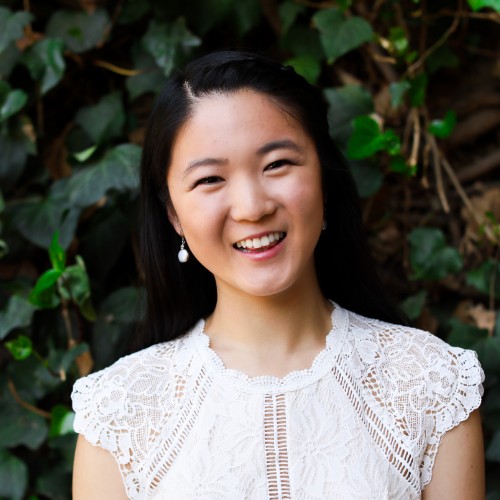
Christina Ren, MS, CGC
Chief Product Officer
Stanford — board-certified genetic counselor. Previously at Orchid.
Contact
Speak with us.
Start with a 30-minute scoping call.
John Yang Co-founder & CEO